Sunday, April 02, 2023

Sermon: Procession, Politics, Parody

Lectionary: Palm Sunday (A)
Text: Matthew 21:1-11

Parades!

Parades are a common feature in many societies and cultures. In America parades are frequently associated with celebratory events and holidays. They represent a coming together of communities, a display of diversity, pride in community, and an expression of joy and celebration.

In certain other parts of the world, parades are often militaristic in nature. They are a means by which authoritarian regimes seek to retain power by threat and intimidation, both against their own citizens and to the watching world.

And after a long but victorious conflict, nearly all nations honor those who fought and served by hosting a parade in which the victors march and are given accolades.

In our small community, we have parades in which all are welcome to participate. We have a parade for the Christmas Tree lighting, for St. Patrick’s Day, during the Little Norway Festival, and for Fourth of July. We also have parades that honor achievements by students: for sports teams that return with championships and for the graduation class.

When Elise and I visited New Orleans several years ago, we learned about the “Second Line” that forms after nearly all parades and processions in that city. The parade might be for a festival, it might be for a wedding, or it might be for a funeral. Whatever the reason for the parade, there is celebration, even for a funeral, and anyone is allowed to join the Second Line to participate in the occasion.

When I thought about parades and New Orleans, my mind next went to Mardi Gras. Mardi Gras is most frequently associated now with drinking and debauchery, but there are colorful parades, costumes, and masks. The name and the event came from the French and their celebration of Fat Tuesday. And then with the virtual hop to France, it isn’t difficult to think about the elaborate costumes and masks and imagine the Carnival in Venice, Italy, which Elise and I both visited and saw some of these in person.

Costumes, Masks, Reversals

A theme runs through celebrations and festivals predating Christian Carnival, through medieval Carnival, and into today’s expressions of the festival. The theme is a part of the costumes and masks that are frequently used during the festivities. This theme is that of reversal of social roles and norms, that of equalizing social status, and through theatrics expose issues found in maintaining the status quo. Many festivals, at least for one day a year, through use of costumes and masks remove the usual social status markers, allowing some semblance of equality to occur, from slaves to kings.

One can find similar themes in the Jewish celebration of Purim, which coincidentally or not, occurs around the same time of year. Masks and costumes may be seen. Men dressing as women, and women dressing as men may be part of some celebrations. Encouraged too, was drinking to excess so that one could no longer distinguish between Haman and Mordecai. These means of celebrating may sound odd to our ears, but they can each be (arguably) traced to themes found in the story of Esther and how justice eventually prevails.[1],[2]

The idea of reversal of social structures and the status quo as a means of finding a path to justice, thus, is not unique to a single culture or religion, but could be understood as a common theme across many of them.

Palm Sunday Entry as a Parody

In the Palm Sunday story of Jesus entering Jerusalem, he too, employs theatrics to parody the social structures, religious systems, and political powers emanating from this city to support them.[3]

Secrecy of a Planned Act

First, when we read carefully, we can see that the precise details of Jesus’ entry into Jerusalem was most likely a planned action. When we read that Jesus sent a couple of his disciples on ahead to bring back a donkey and a colt, it could be divine foreknowledge, but a more obvious interpretation is that this was prearranged, with code phrases and a cloak of secrecy around it.

Why so much secrecy? If word got out too early and to too many, the activity happening could be misinterpreted and misunderstood. Those who had had been following Jesus for the past few years seem to have gotten to the understanding that Jesus was likely not going to overthrow the Romans and their Jewish collaborators as the coming conquering king. So, their response to, “Who is Jesus?”, from the inhabitants of Jerusalem was, “This is the prophet [emphasis mine] Jesus from Nazareth in Galilee.”

There were at least two very different visions of what the Messiah might be when he arrived. The first was as a Davidic king to take back the throne and reign over the Jews. But there was another Messianic expectation, that he would be more in the lines of a prophet or a priest. Jesus proclaimed a kingdom of God, but it would not have as its head a traditional king in the ways of human expectations.

Thus, to reduce the risk of any kind of false expectations of Jesus arriving into Jerusalem as a conquering king might have triggered, he kept things quiet and hidden until the last possible moment. For anyone parading into Jerusalem riding an animal such as a horse or even a donkey could be interpreted as an entry of a king. When the succession of Solomon from David was in question, one of the acts employed to legitimate David’s choice was to have Solomon ride one of David’s mules to the location of his anointing as the new king.[4]

A Political Act

The riding of an animal into Jerusalem was a political act. But the manner of doing so, without an army and instead, only peasants, can be seen as a parody of the dominant powers and practices of that time. For around the same time, perhaps even on the same day, Pontius Pilate would have also arrived in Jerusalem. This was Passover week, the week in which Jews celebrated the long-ago deliverance from Egyptian oppressors. The air would be pregnant with unspoken “what if?” and “when?” questions by the Jews. Pilate’s arrival was to enforce Roman authority, to keep the peace (through threats, force, and violence), discourage any would-be rebellion, and quell any disturbances as quickly and efficiently as possible. He would have arrived on a horse, at the head of his imperial cavalry and soldiers. It would have been an impressive sight of Roman might, armor and weapons, and sure to discourage anyone from carrying out nefarious plans. Most of the city would likely have been quiet while the procession passed, with only the beating of drums, the clip-clop of the hooves, the pounding of the ground, and sounds of armor against armor.[5]

Jesus’ entry, while following a pattern of a royal entry, mocks the reigning powers and domination systems. There is nothing grand or impressive about it. Yet there was celebration and expectations and shouts of acclamation, quite unlike that of Pilate’s arrival.

As a side note, Matthew makes a distinction between the crowds that followed Jesus into Jerusalem and the inhabitants of the city. Commonly, the crowd that turned against Jesus at the trial is equated with the crowd that shouted acclamations to Jesus, but that may not be the case, as many recent biblical scholars have pointed out.

The Messiah's Rule, According to Matthew

Matthew includes a quotation that is derived from Zechariah 9:9. We read this during the readings. I am reading it again to remind us of what this prophetic text says about the kind of Messiah that Matthew wants his readers to see and understand about Jesus:

9 Rejoice greatly, O daughter Zion!
    Shout aloud, O daughter Jerusalem!
See, your king comes to you;
    triumphant and victorious is he,
humble and riding on a donkey,
    on a colt, the foal of a donkey.
10 He will cut off the chariot from Ephraim
    and the war horse from Jerusalem;
and the battle bow shall be cut off,
    and he shall command peace to the nations;
his dominion shall be from sea to sea
    and from the River to the ends of the earth. (Zechariah 9:9-10 NRSVue)

The Messiah does rule, but not with any of the conventional methods and tools employed by human rulers. His attitude is humility. He does away with war, violence, and the tools used to make war and cause violence. By extension, too, because these tools are done away, there can be no threats and coercion as means to rule and maintain authority. Peace is the only tool and method employed by the Messiah.

Fools and Foolishness

I think that “What kind of a fool is this Messiah?” is a legitimate question.

When you and I think “fool”, it could mean someone who does or says things even when they should know better, someone who is unwise, and someone who acts unintelligently. That’s probably the most common present-day understanding of a fool.

But a fool could be a (capital-)Fool, a position held in some medieval royal courts, also known as the Jester. This Fool was at the court to entertain, but they generally enjoyed what was held as Jester’s Privilege. This privilege allowed the Jester or the Fool to parody those in authority, including the monarch, without fear of punishment. This meant that the Fool was in a unique position to speak truth to power, through the use of theatrics and comedy, that no one else could. This Fool was no unwise person, nor someone unintelligent. This individual had to be extremely wise, intelligent, and creative. Shakespeare’s King Lear has the character of a Fool who is the only one able to speak the truth to Lear, but the real fool (using our more common definition) is Lear who refuses to listen to the Fool.

It could be said that Jesus played the part of the Fool in the Palm Sunday theatrics. He parodied the reigning powers of Rome, and the authorities in Jerusalem that collaborated with Rome. He rode into Jerusalem, ahead of a procession, with an alternative kingdom vision. But Jesus did not enjoy the Jester’s Privilege, for his alternative vision collided with the status quo, and by the end of the week the status quo determined that their place in society and history must remain and Jesus must go.

But the foolishness that Jesus embodied and the foolishness of the gospel would outlast the Roman empire. We aren’t told where Pharisee Saul, who would later become known as Apostle Paul, was at the trial of Jesus. But if he was there, he most certainly would have been forcefully demanding the execution of Jesus.

But by the time Paul writes the First Letter to the Corinthians, his tune had completely changed. In the first part of the letter he writes,

18 For the message about the cross is foolishness to those who are perishing, but to us who are being saved it is the power of God. 19 For it is written,

“I will destroy the wisdom of the wise,
    and the discernment of the discerning I will thwart.”

20 Where is the one who is wise? Where is the scholar? Where is the debater of this age? Has not God made foolish the wisdom of the world? 21 For since, in the wisdom of God, the world did not know God through wisdom, God decided, through the foolishness of the proclamation, to save those who believe. 22 For Jews ask for signs and Greeks desire wisdom, 23 but we proclaim Christ crucified, a stumbling block to Jews and foolishness to gentiles, 24 but to those who are the called, both Jews and Greeks, Christ the power of God and the wisdom of God. 25 For God’s foolishness is wiser than human wisdom, and God’s weakness is stronger than human strength. (1 Corinthians 1:18-25 NRSVue)

Reversals as the Gospel's Foolishness

The gospel and the kingdom of God is foolishness because it is a complete reversal of the world’s structures and systems. To any reasonable mind, if the gospel is fully embraced, it cannot work. The idea that there is no hierarchy, there are no power differentials, everyone receives what they need and give everything else away, etc. makes no sense in this world. The principles of the kingdom simply cannot work. Anyone trying it would become impoverished, taken advantage of, and become a laughingstock.

Yet… That is what Jesus is calling for his followers to do.

 24 Then Jesus told his disciples, “If any wish to come after me, let them deny themselves and take up their cross and follow me. 25 For those who want to save their life will lose it, and those who lose their life for my sake will find it. (Matthew 16:24-25 NRSVue)

Jesus, in very clear terms, states that to follow him is to take up the cross, embrace its foolishness and become a Fool.

Called to be Fools?

And once again, I don’t have answers, because like you I’m attached to this world. I have a life here, that even if not perfect, is pretty good. I find it mostly easy to refuse to succumb to using violence and its tools to get my way. But going down the list, I find that coercion and threats can be useful at times. And then I get to the more socially acceptable power structures based on wealth, position, and social status. And using those methods to advance my agenda is far more difficult to reject and avoid.

And yet Jesus, in the hours leading up to his crucifixion and death refused to employ any of them to save himself. Jesus responded to violence with forgiveness. Jesus refused to defend himself with any kind of threats or coercion. Jesus could have called on his divine powers and asserted his position and status, yet he did not.

As we enter Holy Week, let us look to Jesus and how he navigated the tension of living in this world yet living by the principles of God’s kingdom. May our thoughts be guided by God’s Spirit as we examine our own lives and perhaps find those places where we are too attached to this world and its ways.

After his entry into Jerusalem, Jesus overturned tables at the Temple. Do we have the courage to allow God to overturn our attachments to the ways of the world and instead become wise, intelligent, and creative (capital letter-F) Fools for the gospel of Jesus Christ and the kingdom of God?


[4] 1 Kings 1.

[5] Borg, Marcus and Crossan, John Dominic. The Last Week, chapter 1, “Palm Sunday”. This chapter contains an imagined account of Jesus’ entry and Pilate’s entry into Jerusalem occurring on the same day.

Sunday, March 12, 2023

Sermon: A Ministry of Reconciliation


Lectionary: Lent 3A

Texts: Exodus 17:1-7; Psalm 95; Romans 5:1-11; John 4:5-42

Introduction

Whew! That was a very long reading! It should not be surprising to learn that the Samaritan Woman and Jesus at the Well is the longest narrative in John’s gospel. There is so much that can be found in this narrative that it could possibly take a lifetime to explore the story and still not uncover all the lessons that could be gleaned from it. Having such a wealth of options makes it more difficult to choose just one on which to focus.

Among the options for exploration: compare today’s story with last week’s story of Nicodemus. Or the man-meets-woman-at-well motif that is repeated in scripture. Or the topic of effective evangelism and witnessing.

However, the theme that I finally settled on for today is one of reconciliation and the creation of one humanity in Jesus Christ.

History of Hostilities

The acrimony and animosity between Jews and Samaritans are probably familiar to our ears.[1],[2]

The Jews and Samaritans worshiped the same God, although the Samaritans only recognized the authority of the first five books, with some textual differences. Because Deuteronomy specifically declares Mount Gerizim to be blessed, the Samaritans considered it to be sacred and built a temple there. The Jews, however, saw Jerusalem as the proper location for the temple, based on their history through David and Solomon. Today’s gospel reading touches on this conflict.

Within the immediate historical context of Jesus’ time, the Maccabees had destroyed the Samaritan temple at Mount Gerizim around 110 BCE. Although the temple was never rebuilt, the Samaritans still considered the location sacred and the proper site for worship.

The Samaritans could not claim innocence, however. Sometime during the childhood years of Jesus, several Samaritans went into Jerusalem and scattered human bones in the Jerusalem Temple, desecrating it. As we read these stories of Jews and Samaritans, we should recognize that Jesus was very much found within this cultural context of aggrievances between these two people groups. Jesus grew up hearing about how bad Samaritans were, and lived amidst prejudice and hatred of them. If we believe that Jesus was both fully divine and human, then we should at least consider the possibility that Jesus was not immune from these cultural pressures and norms, and that he struggled with the conflict between cultural expectations and divine acceptance and love.[3]

And I think understanding that makes today’s story even more powerful and unexpected.

Led by the Spirit to Unexpected Places

Today’s reading omitted a couple of verses that sets the context. The two verses read, “[Jesus] left Judea and started back to Galilee. But he had to go through Samaria.”[4]

Jews generally avoided traveling through Samaria. As the parenthetical comment in our reading provides, the Jews did not look favorably upon the Samaritans. The degree of prejudice and hostility likely differed between individuals, but to generalize, the Samaritans were seen by Jews as outsiders, less-than, perhaps unclean, and best to avoid close encounters. Thus, if time permitted, most Jews preferred taking a longer route to avoid traveling through Samaria and thus having to eat, drink, and overnight in the region.

But Jesus was compelled to go through Samaria. Whatever cultural pressures and expectations he felt about Samaritans, in that little sentence, “But he had to go through Samaria,” we can see Jesus’ sensitivity to the Spirit (from chapter 3) leading him in unexpected ways to surprising places.

A Brief History Jacob and His Descendants

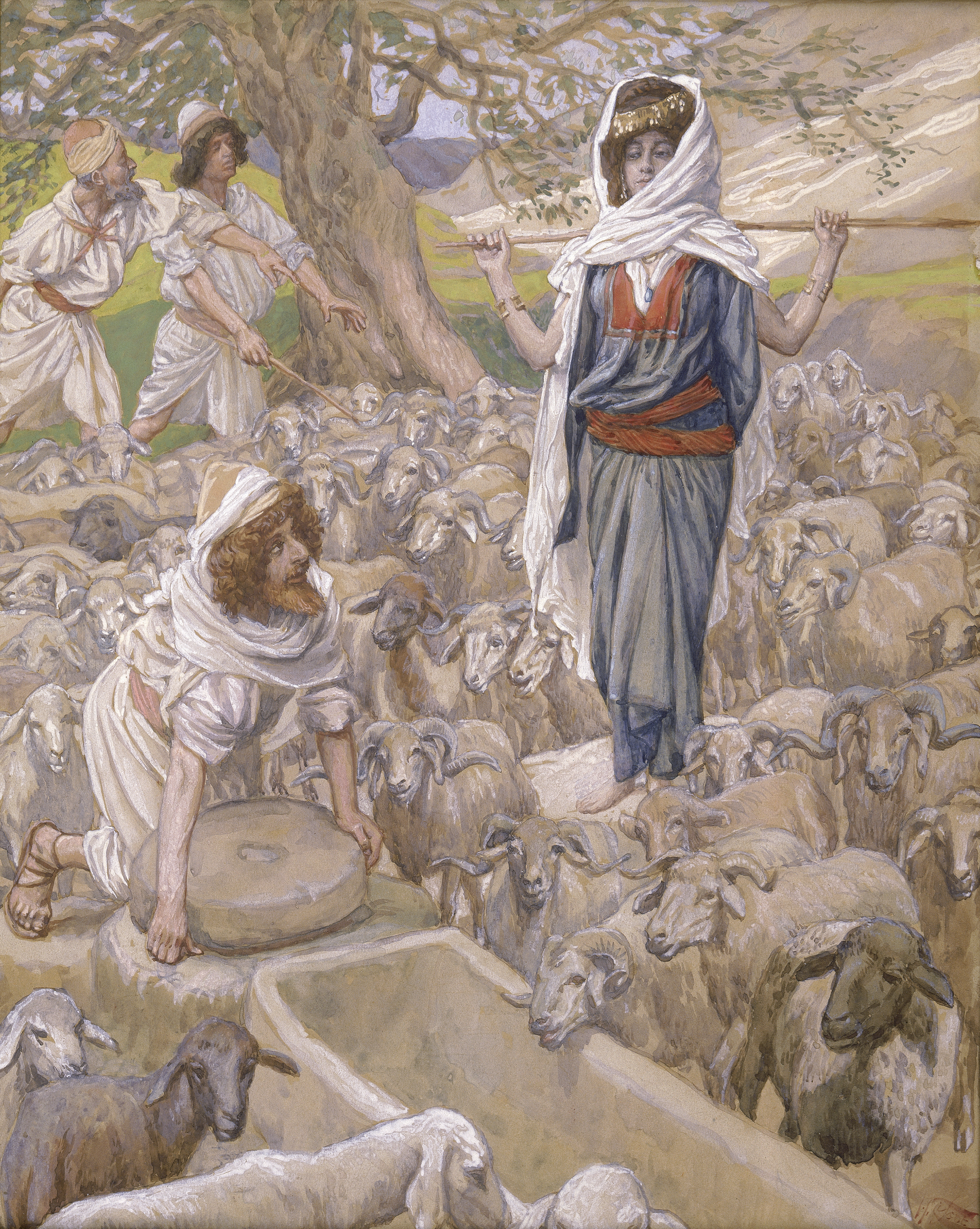
It is, therefore, not unexpected that Jesus ends up sitting at Jacob’s well at midday. The audience of this story is expected to recall the story of Jacob meeting Rachel at a well at midday.[5] This is the beginning of the lineage of all the tribes of Israel, who would eventually split into the Northern and Southern kingdoms. These two kingdoms would go on to have a strained relationship with one another.

The Northern kingdom would be destroyed by the Assyrians, many deported but some remaining in the land. Those who remained would intermarry with immigrants from other nations and they would become who would be known as the Samaritans of Jesus’ time.

The Southern kingdom would be defeated by Babylon and taken into exile. When they returned from exile, the Samaritans were willing to welcome them back and work with the returnees, but the returning Jews would have nothing to do with who they considered mixed-race and theologically mixed people. Any integration of the Samaritans into the Jewish people was condemned and cursed.[6]

Reconciliations

It is against this historical background that Jesus finds himself at Jacob’s well, the place where the two people groups trace their common ancestry. And I think it is no accident that a marriage allusion is clearly intended. Two people groups, divided by historical hostilities, are to be brought together again. They are to be reconciled back into a single family, in God.

The story develops with another unexpected and surprising twist. One of the earliest self-revelation of Jesus as the Messiah is to a woman. One of the deepest theological discussions from Jesus that is recorded is with a woman. One of the very first evangelists, if not the first, for Jesus is a woman.

In a time and place where women were often marginalized, their public roles limited, where their primary life function was to bear children, a Jewish rabbi engaging with a Samaritan woman as a conversational equal was likely unprecedented. In this we can see the beginnings of a reconciliation among human-based gender divisions, and a lesson in the ways God values and respects all people.

Christians and Our Troubled History

Lest we think this is all in the past, the history of Christianity is filled with divisions, hostilities, and violence. Christians have justified persecution of Jews based on an interpretation of the Bible. Internecine conflicts and bloodsheds among Christians fill pages of Christian history. Racism and slavery have been justified by appeal to scripture. Colonialism and attempts to destroy indigenous cultures have been sanctioned by Christian authorities. Subordination and subjugation of women, too, have and continue to be justified by certain readings and interpretations of a few texts. We live with a legacy of horrific acts committed against fellow human beings, in the name of Christianity and God.

A Vision of Reconciliation

This does not have to be our future. Reading a few verses from Romans 5 again, we are reminded,

8 But God proves his love for us in that while we still were sinners Christ died for us. 9 Much more surely, therefore, since we have now been justified by his blood, will we be saved through him from the wrath of God. 10 For if while we were enemies we were reconciled to God through the death of his Son, much more surely, having been reconciled, will we be saved by his life. 11 But more than that, we even boast in God through our Lord Jesus Christ, through whom we have now received reconciliation. (Romans 5:8-11 NRSVue)

 In 2 Corinthians, reconciliation through Christ is further discussed.

16 From now on, therefore, we regard no one from a human point of view; even though we once knew Christ from a human point of view, we no longer know him in that way. 17 So if anyone is in Christ, there is a new creation: everything old has passed away; look, new things have come into being! 18 All this is from God, who reconciled us to himself through Christ and has given us the ministry of reconciliation; 19 that is, in Christ God was reconciling the world to himself, not counting their trespasses against them, and entrusting the message of reconciliation to us. 20 So we are ambassadors for Christ, since God is making his appeal through us; we entreat you on behalf of Christ: be reconciled to God. 21 For our sake God made the one who knew no sin to be sin, so that in him we might become the righteousness of God. (2 Corinthians 5:16-21 NRSVue)

Reconciliation is to God, but when an individual is reconciled to God that infers that they must necessarily be reconciled to all others that are a part of God’s kingdom and family. In the story of Jesus with the Samaritan woman, we see the beginning of some of this reconciliation. But it cannot end there.

The vision that Paul offers is,

 26 for in Christ Jesus you are all children of God through faith. 27 As many of you as were baptized into Christ have clothed yourselves with Christ. 28 There is no longer Jew or Greek; there is no longer slave or free; there is no longer male and female, for all of you are one in Christ Jesus. 29 And if you belong to Christ, then you are Abraham’s offspring, heirs according to the promise. (Galatians 3:26-29 NRSVue)

The vision is for all to be reconciled, to be on equal standing with one another, and to see one another as true equals in Christ.

A Small Caveat

Before I end, I do need to offer a small word of caution. I believe that at least until the next life and world, this reconciliation is primarily between groups and categories that the world and we have created to make distinctions between us and them. When it comes to individuals, I believe that reconciliation may not always be possible nor safe.

Working Together Toward Reconciliation


During this Lenten journey, I invite each of us to take some time to reflect on ways in which we experience divisions with others, and especially those areas that, by maintaining the status quo, offer us privilege and power over others. As suggestions here are some areas to think about: religion, race and ethnicity, gender, wealth and social connections, politics, education and employment. Let us first recognize and confess these sins.

And then, if we are to be ministers of reconciliation, what can we do to offer a genuine egalitarian society where all are welcomed, accepted, valued, and respected equally? Where do we subconsciously behave and treat others according to cultural norms that may be harmful and unloving? Let us ask the Spirit to open our eyes to those areas and give us the courage to reject them and replace them in ways that offer God’s love and grace. Let us in all ways, by the grace and strength of God, strive to be fit ambassadors for Christ.


[2] Samaritan Judean Feud (virtualreligion.net) (https://virtualreligion.net/iho/samaria.html), a few excerpts relating to Samaritans and Jews, from various ancient texts.

[3] A great resource for exploring Jesus’ humanity and its potential implications is What Jesus Learned from Women, by James F. McGrath.

[4] John 4:3-4 (NRSVue)

[5] Genesis 29. And also, Moses when he arrives in Midian, Exodus 2:15b-17.

[6] The book of Nehemiah details this conflict and rejection. Although the book does not specifically use the term “Samaritans” it can be inferred that the people who were living in the land at the time of Jewish exiles’ return would eventually become known as Samaritans. See also Who Were the Samaritans? Their Meaning in the Bible (biblestudytools.com) (https://www.biblestudytools.com/bible-study/topical-studies/the-samaritans-hope-from-the-history-of-a-hated-people.html)

Sunday, March 05, 2023

Sermon: Getting Unstuck


Lectionary: Lent 2A

Texts: Genesis 12:1-4; Psalm 121; Romans 4:1-5, 13-17; John 3:1-17

Confusion

Nicodemus is confused with what Jesus is saying to him. And Jesus seems to be have gotten a little bit frustrated with Nicodemus’ continued confusion.

Why is Nicodemus confused? This story is a familiar one and is visited frequently in sermons.

The explanation usually begins with the word for “anew” that Jesus uses to speak about birth. The word could also mean “again” and “from above.” Great. So, the word could be used to refer to different ways of being born.

But that merely raises another question: why is Nicodemus only able to see one meaning of the word? Why is Nicodemus unable to comprehend that Jesus is speaking about the need to be “born from above?” Reading the rest of the discourse, one of the possible reasons that can be derived is that Nicodemus is unable to understand because his perspective is darkened, and it is from earthly, not from the Spirit. And I think that is true in a broad sense, but it seems like there could be more to it.

Assumptions and Barriers to Understanding

Looking through a reference text this week, I had my own “aha” moment that offered what to me was an improved reason for Nicodemus’ confusion, and one that is (unfortunately) more relatable.

The concept of being “born from above” means that one is metaphorically birthed from God. Nicodemus saw himself and his people as already having been birthed by God, through Abraham. They already belonged to God. So, even if Nicodemus could hear the “born from above” intent of Jesus, Nicodemus could not comprehend why he or his fellow Jews would need to “born from above.”[1] Therefore, he assumes Jesus might be using hyperbole or speaking nonsense and questions how one could be physically reborn.

Nicodemus likely held to a belief that privileged Jews spiritually over the rest of the world. Abraham, Isaac, and Jacob were chosen by God out of all the other nations. They were given a special revelation of God, the Torah, at Mt. Sinai through Moses. They had a special relationship with God.[2] He could not comprehend why they would need another conversion to enter the kingdom of God. His cultural, ethnic, and religious environment prevented him from considering any other possibility.

And here is where Nicodemus’ problem becomes relatable to me and perhaps to many of us today. Does our cultural, social, ethnic, political, religious, and theological assumptions, beliefs, and traditions hinder us from alternative ways of seeing and understanding others, and perhaps even hearing from God?

A Personal Illustration

By way of illustration, I will offer an example from my own life. But I need to make clear that it is one person’s journey, mine, and that others can and do have very different experiences; but also that even though I come from one specific religious upbringing, the issue of religious exclusiveness and privilege can be found in other groups.

I was born into and raised in the Seventh-day Adventist denomination. For thirty-plus years it was pretty much the entirety of my life and world. Everything about life pretty much revolved around the church and its functions and events.

One of the good aspects that I can look back on are the friendships and connections that were made. Because the denomination has some unique and distinctive beliefs and practices, those who belong to the denomination tend to cluster together, and that bond can begin in childhood and last a lifetime.

Another good aspect of it, looking back, is that it regarded the Bible very highly. Since I went to sixteen years of denominations schools, that meant I had sixteen years of increasingly advanced biblical and theological studies. The annual reading through the Bible was highly encouraged. Back when I was actually living through those times though, I thought it was tedious and unnecessary; but it has benefits now, as those ingrained memories provide helpful sparks of insights, especially when I prepare sermons.

But there were negative aspects as well. As I look back from the outside now, I can see how much fundamentalism was present in the experience. Although the denomination does not hold to an inerrant view of scripture, it takes most of what is found in the Bible as quite literal and historical facts and truth.[3],[4] The set of articulated beliefs form rigid boundaries around what is deemed to be correct biblical truth. The denomination sees its beliefs as the “most correct” and sees itself as called by God to convert not just non-Christians but other Christians to itself. It considers itself as the “remnant” that is mentioned in scripture;[5],[6] i.e., it sees itself as particularly favored by God. In many ways how I experienced God and religion in my first two or three decades looks very similar to how Nicodemus understood God and his religion.

Breaking Down Assumptions and Barriers

It was only after having moved to this town, Petersburg, and began to associate with other pastors and their churches that I saw that Christianity has much broader parameters with allowances for much wider and richer practices and experiences. Previously I had understood this to be possible from an intellectual perspective, but I only came to experience it here. You might say that my former assumptions had been broken, the walls around what I believed held correct truth was breached, and I became unstuck from the smallness of exclusivity.

Jesus challenges Nicodemus’ assumptions about what is means to be a part of the kingdom of God and how one enters it. Jesus tells him that simply being born a Jew or observing Jewish religious traditions and practices is insufficient. Jesus tells him that entering God’s kingdom requires a radical change in perspective. The gospel account does not go into detail here as to what that change is – Jesus just tells Nicodemus, “And just as Moses lifted up the serpent in the wilderness, so must the Son of Man be lifted up, that whoever believes in him may have eternal life.”[7] The word “believes” often connote intellectual assent to a set of facts or teachings, but in this gospel it is about trust. What or who does one trust to bring life? Is it ancestry or religious teachings? Or is it found in a person?

Jesus tells Nicodemus, “The wind blows where it chooses, and you hear the sound of it, but you do not know where it comes from or where it goes. So it is with everyone who is born of the Spirit.”[8] From the rest of this gospel account, what we hear and learn is that trust in God involves becoming unstuck from preconceptions about God and becoming open to unexpected ways in which God works in the world.

Childhood me, teenager me, and even young adult me would never have imagined the kinds of unexpected twists and turns my spiritual journey would take.

Basis of Belonging to God

The Apostle Paul had his own experiences of having his assumptions and beliefs completely changed by Jesus. A large portion of his letter to the Romans is his working out how the history of Israel and Judaism now fit into God’s plan. Paul is clear that they have not been done away or replaced. But what Jesus has done is expand what it means to be included in God’s family.

Today’s reading from Romans is a small part of that. In it Paul explains that God’s plan is for all of the world to be included in God’s family. Whereas Israel often pointed to the Exodus and the Law as the beginning of a special relationship with God, Paul goes back to Abraham. Having been physically descended from Abraham was thought to confer a special relationship to Israel and the Jews, but in Romans chapter 4 Paul argues that Abraham is the father of all the nations.[9] Abraham is the father of all the nations not because of physical birth or because the Law would eventually come through Moses, a descendant, but because Abraham demonstrated trust in God.

And what was this trust?

Abram Trusted God

This brings us to the reading from Genesis. When God called Abram (before he was given Abraham as a new name) to leave his ancestral lands and family, and go to where God would lead him, Abram got up and left.

Where one’s identity was tied to both land and family, to get up and leave both behind was almost unthinkable. God was telling Abram to leave behind literally everything that he had known and had given him identity, meaning, and place in life for his seventy-five years. He had no son to carry on his name. God told Abram that he would have to start his life completely over, to begin life as if he was born again. Instead of being born into a physical family and tribe, God would become his father and family for this new life that Abram would enter into.

That brings us full circle back to where we began with Nicodemus. Nicodemus knew the scriptures. He knew the history of Israel. But his assumptions about God and his ethnic and religious belonging blocked him from seeing how broader God’s inclusiveness and blessings were.

Jesus’ Invitation to Trust God

Jesus was inviting and pleading for Nicodemus to be like Abram, to leave behind those things that he thought brought identity, meaning, and place in life, be born anew, be born from above, and follow the Spirit’s leading into the kingdom of God.

When Paul encountered Jesus on the Damascus Road, he accepted Jesus’ invitation to leave behind the hindrances of the past and follow the Spirit into a new life and God’s kingdom.

The same invitation remains for each of us. Part of Lent is introspection and reflection. This week my encouragement to you is to consider ways in which your journey with God might have become stuck, and to consider ways in which you might get unstuck.

Are expectations of others keeping you from following God more authentically? Do you have negative experiences from the past that make it difficult to trust, especially God? Do you have conflicts or problems with the church? These are just a few suggested placed to start.

The important thing is to acknowledge that not all is well and identify things that are possibly contributing to stress and discomfort. The Psalms contain numerous examples of where the psalmists unleash their complaints and problems with God onto God. It may be a cliché, but it is good to be reminded that God’s lovingkindness can handle our biggest complaints and accusations hurled at God.

Letting go of some of the hurts and complaints we have can allow us to hear God more clearly and sense the presence and leading of the Spirit. And in response we can follow, again, the example of the psalmists in offering praise. Many of the psalms that begin with complaints and accusations end with praise. The psalmists offer praise even before God has responded. They hold on to God’s faithfulness and trust that God will respond.

Let me close by reciting Psalm 121 once more as one of our bases for trust in God.

A Song of Ascents.

1 I lift up my eyes to the hills—
    from where will my help come?
2 My help comes from the Lord,
    who made heaven and earth.

3 He will not let your foot be moved;
    he who keeps you will not slumber.
4 He who keeps Israel
    will neither slumber nor sleep.

5 The Lord is your keeper;
    the Lord is your shade at your right hand.
6 The sun shall not strike you by day
    nor the moon by night.

7 The Lord will keep you from all evil;
    he will keep your life.
8 The Lord will keep
    your going out and your coming in
    from this time on and forevermore. (Psalm 121 NRSVue)


[1] IVP Bible Background Commentary: New Testament, volume 2. Entry for John 3:3-4, 5. “Jesus speaks literally of being born “from above,” which means “from God” (“above,” like “heaven,” was a Jewish circumlocution, or roundabout expression, for God) … Most evidence for Greek traditions about individual rebirth come from a later period, possibly formulated in light of Christianity, but some Jewish analogies probably lack direct Christian influence. Because Jewish teachers spoke of Gentile converts to Judaism as starting life anew like “newborn children” (just as adopted sons under Roman law relinquished all legal status in their former family when they became part of a new one), Nicodemus should have understood that Jesus meant conversion; but it never occurs to him that someone Jewish would need to convert to the true faith of Israel… Converts to Judaism were said to become “as newborn children”; their conversion included immersion in water to remove Gentile impurity. “Born of water” thus could clarify for Nicodemus that “born from above” means conversion, not a second physical birth.”

[2] John 8:31-59 describes how the writer of this gospel account perceives as the Jewish perspective on belonging to God through ancestry and ethnicity. Jesus challenges this perspective and can be seen as an elaboration on what he says to Nicodemus.

[3] Seventh-day Adventist Fundamental Belief #1. “The Holy Scriptures, Old and New Testaments, are the written Word of God, given by divine inspiration. The inspired authors spoke and wrote as they were moved by the Holy Spirit. In this Word, God has committed to humanity the knowledge necessary for salvation. The Holy Scriptures are the supreme, authoritative, and the infallible revelation of His will. They are the standard of character, the test of experience, the definitive revealer of doctrines, and the trustworthy record of God’s acts in history.” (https://www.adventist.org/holy-scriptures/)

[4] Seventh-day Adventist Fundamental Belief #6. “God has revealed in Scripture the authentic and historical account of His creative activity. He created the universe, and in a recent six-day creation the Lord made “the heavens and the earth, the sea, and all that is in them” and rested on the seventh day. Thus He established the Sabbath as a perpetual memorial of the work He performed and completed during six literal days that together with the Sabbath constituted the same unit of time that we call a week today. The first man and woman were made in the image of God as the crowning work of Creation, given dominion over the world, and charged with responsibility to care for it. When the world was finished it was “very good,” declaring the glory of God.” (https://www.adventist.org/creation/)

[5] Seventh-day Adventist Fundamental Belief #13. “The universal church is composed of all who truly believe in Christ, but in the last days, a time of widespread apostasy, a remnant has been called out to keep the commandments of God and the faith of Jesus. This remnant announces the arrival of the judgment hour, proclaims salvation through Christ, and heralds the approach of His second advent. This proclamation is symbolized by the three angels of Revelation 14; it coincides with the work of judgment in heaven and results in a work of repentance and reform on earth. Every believer is called to have a personal part in this worldwide witness.” (https://www.adventist.org/remnant-and-its-mission/)

[6] Seventh-day Adventist Fundamental Belief #18. “The Scriptures testify that one of the gifts of the Holy Spirit is prophecy. This gift is an identifying mark of the remnant church and we believe it was manifested in the ministry of Ellen G. White. Her writings speak with prophetic authority and provide comfort, guidance, instruction, and correction to the church. They also make clear that the Bible is the standard by which all teaching and experience must be tested.” (https://www.adventist.org/gift-of-prophecy/)

[7] John 3:14-15.

[8] John 3:8.

[9] Romans 4:17.


Monday, February 27, 2023

Sermon: Letting Go

Lectionary: Lent 1A

Texts: Genesis 2:15-17; 3:1-7; Psalm 32; Romans 5:12-19; Matthew 4:1-11

Forty Days

The gospel reading for today highlights two of the most common features or practices associated with the season of Lent. The first is the duration – forty days. The second is the practice of fasting. There may be an allusion to a possible third feature, the idea of a test or trial, that may be found in the reading that is also associated with Lent.

Jesus, Moses, Israel

In Matthew’s gospel, the temptation account is placed immediately before the Sermon on the Mount. The forty days and nights parallel the time Moses spent on Mount Sinai.[1] A possible related parallel is that Moses spent time in the wilderness of Midian where he encountered God.[2] As I have discussed before, Matthew portrays Jesus as a new Moses, and therefore it is important to show these parallels between Moses and Jesus.

In addition, however, Jesus is also shown to be the beginning of a new, perfect Israel. The first Israel was forced to spend forty years in the wilderness after failing to trust that God would lead them to possess the land promised to them.[3] These forty years was a period of testing.[4] In fact Jesus’ response to the first test comes directly from a passage in Deuteronomy that describes Israel’s forty years of testing:

2 Remember the long way that the Lord your God has led you these forty years in the wilderness, in order to humble you, testing you to know what was in your heart, whether or not you would keep his commandments. 3 He humbled you by letting you hunger, then by feeding you with manna, with which neither you nor your ancestors were acquainted, in order to make you understand that one does not live by bread alone but by every word that comes from the mouth of the Lord. (Deuteronomy 8:2-3, NRSVue)

In spite of the great signs and wonders that God had performed to bring the Israelites out of bondage, once faced with the wilderness the ancient Israelites failed to trust God. They failed to trust that God would sustain them.[5] They are recorded as having “tested the Lord” when they accused God of bringing them into the wilderness to kill them with thirst.[6] And they failed to trust in God when Moses was long on Sinai, and they instead turned to crafting a golden calf to lead them.[7]

Jesus Succeeds Where Others Failed

In Matthew 4, Jesus faces the same types of tests. He is first tested on whether or not he will trust God to provide. He is next tested on whether to test God by presuming on a taken-out-of-context scripture that promises God’s protection. Jesus’ third and final test is who and what will lead his life. Where ancient Israel failed these tests, Jesus succeeds and passes the test. In each case, Jesus chooses to trust in what he knows is true about God. Jesus does not use his own power to provide for himself. Jesus does not needlessly test God’s words through reckless actions. And Jesus rejects the temptation of power and control as a means of achieving his ends, and instead trusts in God’s schedule and arrangements.

Through his success in meeting these trials, Jesus shows that he is a fit representative of a new community that will fulfill the promise and mission that was given to Israel.

I need to clarify here that this is not saying that Israel was replaced. The new community is being formed out of Israel and Israel will always be a fundamental part of the community, but its composition will become global and embrace all of humanity. The Apostle Paul struggles with the question of “what happens with Israel?” in his letter to the Romans.[8] We will not get into that question this time, but we will turn to Paul and his letter to the Romans now.

Jesus as the New Adam

Paul takes the parallel with Jesus all the way back to Adam. Whereas the first representative human failed to trust God and brought death to not just humankind, but to all creation, Jesus’ trust in God, even to the cross, brings redemption to all of creation.[9]

Not surprisingly, Jesus’ wilderness trials parallel what Adam and Eve faced in the Garden of Eden. The trials, the tests, the temptations involve:

1)     Sustenance and food and who controls how it is given. Do I accept what is given and any limits, or do I go beyond what is allowed? Do I seize (or miraculously create) what is normally not available, because I can wield power?

2)     Trusting God’s words or instead test them. Do we doubt the fences and guardrails that God has fashioned? Do we seize upon some of God’s words and try to utilize them for our own benefit or to use against others?

3)     “I know better,” “I’ll do it my way,” vs. “I’ll trust God to do it God’s way in God’s time.”

The Lure of Power Offered as Solution to Life

The common theme across all three temptations is power and control. The temptations attempt to appeal to some of the basic anxieties that arise from the precariousness and uncertainties of life on planet Earth. The temptation offer power and control as the solution to life’s uncertainties.

“Will I have enough?” is a question of basic needs and sustenance. But the history of human civilizations and societies, from ancient times to now, show that for many people, the answer to the question is always, “No.” The fear of losing what one already has, however little or much, leads to ever more amassing of wealth. The desire to have more respects no wealth boundaries. From the destitute to the ultra-wealthy, more is a common refrain. The desire to obtain goods through unethical and even illicit means is a temptation for all, but perhaps even more so for those who have the power and the means to get away with it. One need not look too far from modern businesses to see many who have succumbed to this temptation. And what’s more, unless the offense is egregious, society tacitly gives its approval. The end goal, if it could be achieved, is for a person to be able to be completely self-reliant.

“Will I be safe?” is another question about basic needs. We all long for security, predictability, and comfort in this life. But as natural disasters, wars, gun violence, and so much more take place day after day, there is no such thing as a guarantee of safety in this life. For many people there is little they can do to improve the odds of keeping safe. For others, perhaps many of us here, we do have some means to attempt to improve our security. We might upgrade to better locks. Purchase an alarm system and security cameras. Some may choose to arm themselves. We could include in this arena of security the desire to live forever. The end goal of ultimate security is eternal life that is crafted based on my personal preferences.

“Do I have any significance?” is a question of identity, meaning, and purpose. One way to secure a semblance of identity and purpose is to achieve a degree of power. Those who have power are not ignored. They have the means to get things done, and that means others will come knocking on the door and asking for favors. With enough power, a person can do pretty much anything that they want. So the pursuit of power, much like the pursuit of wealth, becomes an endless one. There is never enough power. One can always have a little bit more. The goal of ultimate power is to answer to no one, to craft a world in which everything and everyone caters to my interests.

Avoiding the Lure

Jesus rejects the offer of each of these temptations. He rejects the temptation to provide for himself. He rejects the temptation to use his position and power to demand security and protection of his life. And finally, Jesus rejects the temptation to fashion his identity, meaning, and purpose based on power over the world. Jesus rejects the identity and purpose of a Messiah formed around the world’s expectations of what a Messiah should be.

The desires for adequate sustenance, reasonable security, and for identity, meaning, and purpose are legitimate. After all, in the Lord’s Prayer we pray, “Give us today our daily bread.”[10] Jesus addresses the problem of worrying by saying, “Therefore I tell you, do not worry about your life, what you will eat or what you will drink, or about your body, what you will wear. Is not life more than food and the body more than clothing? … But seek first the kingdom of God and his righteousness, and all these things will be given to you as well.”[11] As for identity and purpose, Jesus tells us that we are salt and light representing God to the world.[12]

Letting Go

What if this Lent we really attempt to trust what Jesus has revealed about God and God’s care for us? What if we give up our desire to control our lives (and that often leads to controlling others as well)? What if we let go of the pursuit of material security and prosperity that the world assures us we need? What if we let go of worrying about our safety and future? What if we let go of trying to conform our identity and purpose to the expectations of the world?

Jesus trusted in God to provide for his provisions and his well-being. Jesus had heard God already declare that he was God’s son, and he held on to that identity.

This Lenten season, let us take time to reflect on how we might be pursuing desires that are not of God, and instead redirect our desires to be in alignment with what God wants for us, our families, our churches, and our communities.

Resist the temptations to cling to empty promises of prosperity, security, and power to fulfill our desires. Instead, let them go and find in Christ all that we need for this life and the life to come.


[1] Exodus 24:18.

[2] Exodus 3.

[3] Numbers 14:33, 34.

[4] Deuteronomy 8:2, 3.

[5] Exodus 16.

[6] Exodus 17.

[7] Exodus 32.

[8] Romans 9-11.

[9] Romans 8:19-23.

[10] Matthew 6:11.

[11] Matthew 6:25, 33.

[12] Matthew 5:13-16.