Showing posts with label Reconciliation. Show all posts

Sunday, June 16, 2024

Sermon: What Matters

Lectionary: Proper 6(B)

Text: 2 Corinthians 5:6-17

Martinvl, CC BY-SA 4.0 <https://creativecommons.org/licenses/by-sa/4.0>, via Wikimedia Commons
"Reconciliation"

Introduction

A criticism that is sometimes leveled against Christians is that “some people are so heavenly minded that they are no earthly good.”[1] And if we take some of the texts found in the New Testament, we could certainly come up with a basis for focusing solely on salvation as a means of exiting this world and getting to heaven. Part of the reading this morning from 2 Corinthians 5 could be interpreted in that way.

I grew up in a theology that strongly emphasized the Second Coming and the saved would be taken up, after which this present world would be destroyed. Then this world would be recreated with the arrival of the New Jerusalem. In one sense then, I grew up with the idea that this world and everything in it was quite temporary and we shouldn’t spend too much effort “down here.”

But on the other hand, the denomination had a strong organizational branch dedicated to education, health and medicine, and disaster relief. It was very much concerned about growing its presence. But these were most always undertaken toward the ultimate goal of evangelism and “getting people saved.”

What I read in Paul’s words found in today’s reading is not either-or, but a both-and. In a nutshell, what Paul seems to be writing to the Corinthians is that what is done in this world matters now to the physical world, and what is done in this world matters in the future when Christ will take into account what was done.

It is on this latter point that Christians raise eyebrows because the idea of a judgment that evaluates works and then offers a payment based on that seems rather foreign and antithetical to the entire message of gospel and grace, especially when it is coming from Paul, the foremost champion of grace over law and works.

What is going on?

The Church at Corinth and Paul

First, it needs to be noted that the idea of a future judgment is not foreign to Paul’s theology. In addition to what we read today, we find Paul writing about a future judgment and associated rewards in Romans and in 1 Corinthians.[2] What is key to note about Paul’s theology of future judgment is that the same God who saves is also the judge. Rather than fearing judgment then, those who belong to Christ should know relief and assurance instead.

Next let us turn to the context of the church in Corinth. Many of you are already likely aware that the church in Corinth seems to have been plagued by one problem, issue, and conflict after another. At least based on the Pauline letters that we have left to us to ponder. There were conflicts of leadership: some preferred Peter, others Apollos, others Paul, and others eschewed any kind of human leadership and went straight to Christ.[3] There was within the church sexual immorality that even the pagan Romans frowned on.[4] Members were taking one another into Roman courts to bring and settle lawsuits.[5] There were conflicts over what one could eat or not eat.[6] There were rivalries over manifestations of spiritual gifts.[7] There were even conflicts involving the Communion meal.[8] Members of the church were judging one another and dividing into factions, each believing themselves to be better than the others.

One of the issues then may be related to an over-realized eschatology that some of the members may have come to believe. These thought that because they had been saved, the full realization of salvation had already come and that what they did in their physical bodies on the physical world no longer mattered.[9]

A second issue was that of authority. It seems that Paul’s authority as an apostle was being questioned. He did not act like teachers and authority figures were expected to behave. He did not demand to be supported, and instead supported himself. The church in Corinth saw this not as a sign of humble Christian behavior, but as a lack of power and authority and preferred others who acted more in line with their expectations.[10]

The Second Letter to the Corinthian Church

The First Epistle to the Corinthians addressed these issues and several others. But apparently the issues didn’t get resolved, because Paul had to write at least one more letter. Chapters 10 through 13 of the Second Epistle to the Corinthians is probably that letter. In these chapters, Paul again has to defend his authority as an apostle and rebuke the church at Corinth for their ongoing conflicts and behaviors unbecoming of Christ-followers.

And that brings us to the first seven chapters of the Second Epistle. (Several modern scholars theorize that the Second Epistle is an amalgamation of three separate letters that are found out of order from their chronologies.)[11] These seven chapters, the last of Paul’s letters that we have written to the church in Corinth, may be seen as a reconciliation letter. The conflict and issues at Corinth seem to have been finally resolved and Paul writes to explain himself and assure the Corinthians that he has not continued to be angry with them. Our reading today was taken from the middle of this material.

The Future Hope and Present Realities

In this subsection, Paul seems to be writing excitedly about the hope he and all Christians have in the promised future restoration of all things. Physical bodies might be weak, they wear out, and trouble can hit us at any time. Death is always a possibility. But none of that compares to the life that we already have in Christ and the resurrection that we will experience. What we see is temporal. All the troubles are temporary. What is promised beyond what we can currently see surpasses anything we can truly imagine. The visible, physical world weighs us down. We long for the life to come. We do not belong to this world.

At this point we might expect Paul to go all in on the future, the world and life to come. He does, indeed, long for it and hope for it. But he tells his audience that while this world might be temporary and our permanent home isn’t here, we should nevertheless live in the here and now as if it were our home and Christ was here with us. A precedent for this pattern may be found in Jeremiah 29 where the prophet writes to the exiles in Babylon to live in their land of exile, the land of sojourn, as though they were going to be there a long time. They were commanded to promote the welfare of their temporary home because their future was tied to the future of their temporary home.[12]

Both-And

If we heed Paul’s words in 2 Corinthians chapter 5, we will be better equipped to stay away from a couple ditches that we could find ourselves in. The first ditch is one where because all our hope is in the future, we come to believe that nothing in the present world matters. This is where Paul’s words about judgment and rewards based in what happens in the body are pertinent. How we treat the physical world and how we relate to creation and created beings matters to God and therefore, it should matter to us. The words about judgment is a call to critical self-reflection for individuals and for faith communities. If we claim to be followers of Christ, but ignore Christ’s concerns, are we really following Christ?

The second ditch is one where only the present is of concern. Especially since Christ’s return is so long in coming, and placing faith and hope in an event that could be another two-thousand years off seems esoteric and difficult to comprehend. It is much easier to try to make concrete, tangible efforts in the present and minimize or ignore what might or might not happen in the future as it is inconvenient to try to explain to those outside the church this very delayed hope.

The Ultimate Hope of Reconciliation

We need to go past today’s assigned reading, but when we do we can see that for Paul, ethical works done in the present was a means of bringing reconciliation. Starting with the last couple verses from the reading here is the rest of chapter 5.

16 So then, from this point on we won’t recognize people by human standards. Even though we used to know Christ by human standards, that isn’t how we know him now. 17 So then, if anyone is in Christ, that person is part of the new creation. The old things have gone away, and look, new things have arrived!

18 All of these new things are from God, who reconciled us to himself through Christ and who gave us the ministry of reconciliation. 19 In other words, God was reconciling the world to himself through Christ, by not counting people’s sins against them. He has trusted us with this message of reconciliation.

20 So we are ambassadors who represent Christ. God is negotiating with you through us. We beg you as Christ’s representatives, “Be reconciled to God!” 21 God caused the one who didn’t know sin to be sin for our sake so that through him we could become the righteousness of God. (2 Corinthians 5:16-21 CEB)

Anyone can devote their lives to doing ethical work in this world and make a positive contribution and possibly a lasting difference. But for Christians, there is an even larger objective. It is the reconciliation of the world back to God. The hope of Christian faith is not simply a better world or eternal life, but a world and life reconciled back to the Creator so that we can all live together in peace and harmony, without fear.

Last week we read Paul’s words, “We also have faith, and so we also speak.” We heard about the importance of speaking about our faith. Today is a continuation of that conversation.

Paul’s theology is both-and. We must love this world, relate to it, and treat it as God does. We must begin to plant the seeds of God’s new creation within the world around us. We must tend to the sprouts and growth as they appear. But we must also point toward and speak about the hope that is found in the final reconciliation of the world to God. Our faith is not just in a glorified future, but in the power of God that is already recreating and restoring, who is working through our efforts to be Christ’s representatives in this world.

References

Dunn, J. D., & Rogerson, J. W. (2003). Eerdmans Commentary on the Bible. Grand Rapids, Michigan: Wm. B. Eerdmans Publishing Co.


[1] Attributed to Oliver Wendell Holmes, Sr.

[2] Romans 2:16; 14:10-11; 1 Corinthians 3:10-15.

[3] 1 Corinthians 1:10-12.

[4] 1 Corinthians 5.

[5] 1 Corinthians 6:1-8.

[6] 1 Corinthians 8.

[7] 1 Corinthians 12-14.

[8] 1 Corinthians 11:17-34.

[9] Paul’s discussion of the resurrection in 1 Cor. 15 seems to be related to this.

[10] 1 Corinthians 4.

[11] (Dunn & Rogerson, 2003), Introduction to 2 Corinthians.

[12] Jeremiah 29:4-7.


Sunday, March 12, 2023

Sermon: A Ministry of Reconciliation


Lectionary: Lent 3A

Texts: Exodus 17:1-7; Psalm 95; Romans 5:1-11; John 4:5-42

Introduction

Whew! That was a very long reading! It should not be surprising to learn that the Samaritan Woman and Jesus at the Well is the longest narrative in John’s gospel. There is so much that can be found in this narrative that it could possibly take a lifetime to explore the story and still not uncover all the lessons that could be gleaned from it. Having such a wealth of options makes it more difficult to choose just one on which to focus.

Among the options for exploration: compare today’s story with last week’s story of Nicodemus. Or the man-meets-woman-at-well motif that is repeated in scripture. Or the topic of effective evangelism and witnessing.

However, the theme that I finally settled on for today is one of reconciliation and the creation of one humanity in Jesus Christ.

History of Hostilities

The acrimony and animosity between Jews and Samaritans are probably familiar to our ears.[1],[2]

The Jews and Samaritans worshiped the same God, although the Samaritans only recognized the authority of the first five books, with some textual differences. Because Deuteronomy specifically declares Mount Gerizim to be blessed, the Samaritans considered it to be sacred and built a temple there. The Jews, however, saw Jerusalem as the proper location for the temple, based on their history through David and Solomon. Today’s gospel reading touches on this conflict.

Within the immediate historical context of Jesus’ time, the Maccabees had destroyed the Samaritan temple at Mount Gerizim around 110 BCE. Although the temple was never rebuilt, the Samaritans still considered the location sacred and the proper site for worship.

The Samaritans could not claim innocence, however. Sometime during the childhood years of Jesus, several Samaritans went into Jerusalem and scattered human bones in the Jerusalem Temple, desecrating it. As we read these stories of Jews and Samaritans, we should recognize that Jesus was very much found within this cultural context of aggrievances between these two people groups. Jesus grew up hearing about how bad Samaritans were, and lived amidst prejudice and hatred of them. If we believe that Jesus was both fully divine and human, then we should at least consider the possibility that Jesus was not immune from these cultural pressures and norms, and that he struggled with the conflict between cultural expectations and divine acceptance and love.[3]

And I think understanding that makes today’s story even more powerful and unexpected.

Led by the Spirit to Unexpected Places

Today’s reading omitted a couple of verses that sets the context. The two verses read, “[Jesus] left Judea and started back to Galilee. But he had to go through Samaria.”[4]

Jews generally avoided traveling through Samaria. As the parenthetical comment in our reading provides, the Jews did not look favorably upon the Samaritans. The degree of prejudice and hostility likely differed between individuals, but to generalize, the Samaritans were seen by Jews as outsiders, less-than, perhaps unclean, and best to avoid close encounters. Thus, if time permitted, most Jews preferred taking a longer route to avoid traveling through Samaria and thus having to eat, drink, and overnight in the region.

But Jesus was compelled to go through Samaria. Whatever cultural pressures and expectations he felt about Samaritans, in that little sentence, “But he had to go through Samaria,” we can see Jesus’ sensitivity to the Spirit (from chapter 3) leading him in unexpected ways to surprising places.

A Brief History Jacob and His Descendants

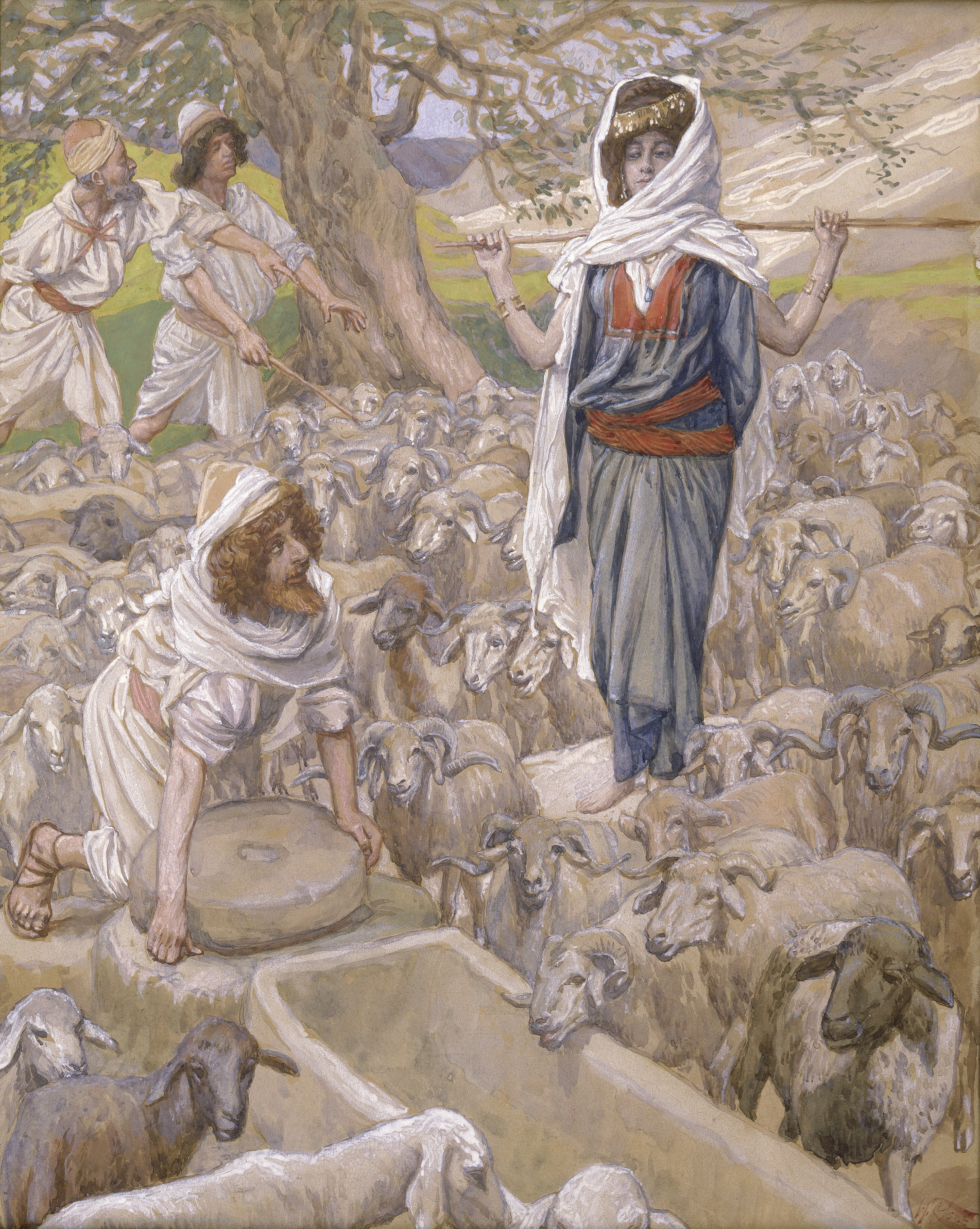
It is, therefore, not unexpected that Jesus ends up sitting at Jacob’s well at midday. The audience of this story is expected to recall the story of Jacob meeting Rachel at a well at midday.[5] This is the beginning of the lineage of all the tribes of Israel, who would eventually split into the Northern and Southern kingdoms. These two kingdoms would go on to have a strained relationship with one another.

The Northern kingdom would be destroyed by the Assyrians, many deported but some remaining in the land. Those who remained would intermarry with immigrants from other nations and they would become who would be known as the Samaritans of Jesus’ time.

The Southern kingdom would be defeated by Babylon and taken into exile. When they returned from exile, the Samaritans were willing to welcome them back and work with the returnees, but the returning Jews would have nothing to do with who they considered mixed-race and theologically mixed people. Any integration of the Samaritans into the Jewish people was condemned and cursed.[6]

Reconciliations

It is against this historical background that Jesus finds himself at Jacob’s well, the place where the two people groups trace their common ancestry. And I think it is no accident that a marriage allusion is clearly intended. Two people groups, divided by historical hostilities, are to be brought together again. They are to be reconciled back into a single family, in God.

The story develops with another unexpected and surprising twist. One of the earliest self-revelation of Jesus as the Messiah is to a woman. One of the deepest theological discussions from Jesus that is recorded is with a woman. One of the very first evangelists, if not the first, for Jesus is a woman.

In a time and place where women were often marginalized, their public roles limited, where their primary life function was to bear children, a Jewish rabbi engaging with a Samaritan woman as a conversational equal was likely unprecedented. In this we can see the beginnings of a reconciliation among human-based gender divisions, and a lesson in the ways God values and respects all people.

Christians and Our Troubled History

Lest we think this is all in the past, the history of Christianity is filled with divisions, hostilities, and violence. Christians have justified persecution of Jews based on an interpretation of the Bible. Internecine conflicts and bloodsheds among Christians fill pages of Christian history. Racism and slavery have been justified by appeal to scripture. Colonialism and attempts to destroy indigenous cultures have been sanctioned by Christian authorities. Subordination and subjugation of women, too, have and continue to be justified by certain readings and interpretations of a few texts. We live with a legacy of horrific acts committed against fellow human beings, in the name of Christianity and God.

A Vision of Reconciliation

This does not have to be our future. Reading a few verses from Romans 5 again, we are reminded,

But God proves his love for us in that while we still were sinners Christ died for us. Much more surely, therefore, since we have now been justified by his blood, will we be saved through him from the wrath of God. 10 For if while we were enemies we were reconciled to God through the death of his Son, much more surely, having been reconciled, will we be saved by his life. 11 But more than that, we even boast in God through our Lord Jesus Christ, through whom we have now received reconciliation. (Romans 5:8-11 NRSVue)

 In 2 Corinthians, reconciliation through Christ is further discussed.

16 From now on, therefore, we regard no one from a human point of view; even though we once knew Christ from a human point of view, we no longer know him in that way. 17 So if anyone is in Christ, there is a new creation: everything old has passed away; look, new things have come into being! 18 All this is from God, who reconciled us to himself through Christ and has given us the ministry of reconciliation; 19 that is, in Christ God was reconciling the world to himself, not counting their trespasses against them, and entrusting the message of reconciliation to us. 20 So we are ambassadors for Christ, since God is making his appeal through us; we entreat you on behalf of Christ: be reconciled to God. 21 For our sake God made the one who knew no sin to be sin, so that in him we might become the righteousness of God. (2 Corinthians 5:16-21 NRSVue)

Reconciliation is to God, but when an individual is reconciled to God that infers that they must necessarily be reconciled to all others that are a part of God’s kingdom and family. In the story of Jesus with the Samaritan woman, we see the beginning of some of this reconciliation. But it cannot end there.

The vision that Paul offers is,

 26 for in Christ Jesus you are all children of God through faith. 27 As many of you as were baptized into Christ have clothed yourselves with Christ. 28 There is no longer Jew or Greek; there is no longer slave or free; there is no longer male and female, for all of you are one in Christ Jesus. 29 And if you belong to Christ, then you are Abraham’s offspring, heirs according to the promise. (Galatians 3:26-29 NRSVue)

The vision is for all to be reconciled, to be on equal standing with one another, and to see one another as true equals in Christ.

A Small Caveat

Before I end, I do need to offer a small word of caution. I believe that at least until the next life and world, this reconciliation is primarily between groups and categories that the world and we have created to make distinctions between us and them. When it comes to individuals, I believe that reconciliation may not always be possible nor safe.

Working Together Toward Reconciliation


During this Lenten journey, I invite each of us to take some time to reflect on ways in which we experience divisions with others, and especially those areas that, by maintaining the status quo, offer us privilege and power over others. As suggestions here are some areas to think about: religion, race and ethnicity, gender, wealth and social connections, politics, education and employment. Let us first recognize and confess these sins.

And then, if we are to be ministers of reconciliation, what can we do to offer a genuine egalitarian society where all are welcomed, accepted, valued, and respected equally? Where do we subconsciously behave and treat others according to cultural norms that may be harmful and unloving? Let us ask the Spirit to open our eyes to those areas and give us the courage to reject them and replace them in ways that offer God’s love and grace. Let us in all ways, by the grace and strength of God, strive to be fit ambassadors for Christ.


[2] Samaritan Judean Feud (virtualreligion.net) (https://virtualreligion.net/iho/samaria.html), a few excerpts relating to Samaritans and Jews, from various ancient texts.

[3] A great resource for exploring Jesus’ humanity and its potential implications is What Jesus Learned from Women, by James F. McGrath.

[4] John 4:3-4 (NRSVue)

[5] Genesis 29. And also, Moses when he arrives in Midian, Exodus 2:15b-17.

[6] The book of Nehemiah details this conflict and rejection. Although the book does not specifically use the term “Samaritans” it can be inferred that the people who were living in the land at the time of Jewish exiles’ return would eventually become known as Samaritans. See also Who Were the Samaritans? Their Meaning in the Bible (biblestudytools.com) (https://www.biblestudytools.com/bible-study/topical-studies/the-samaritans-hope-from-the-history-of-a-hated-people.html)