Showing posts with label Acts 2. Show all posts

Sunday, May 28, 2023

Sermon: Signs

Lectionary: Pentecost (A)
Text: Numbers 11:24-30; Acts 2:1-21; John 20:19-23

Introduction

I’m sure you have heard the saying, “Don’t put God in a box,” or something like it, perhaps many times in your experience. We all understand what that means and its intent – that God is present and works beyond our small understandings and expectations of how God is supposed to be and act. But it is much more difficult for us to take that saying to heart and for us to interact with the world as God does.

We have our comfort zones. Our little boxes. And perhaps that is often truer in religious settings. We have our traditions and ways of doing things that are comfortable. We have a nice order and liturgy. We know what to expect and when to expect them. Sure, an occasional change might be nice, but don’t make the change too big. There are boundaries that define good order. We like everything and everyone to fit within those boundaries. It makes us uncomfortable when the boundaries are breached. It might possibly even be thought of as unacceptable and best to be kept out and away.

Prophesying in the Ancient World

I suspect most of us would be rather uncomfortable with the behavior of prophets and the act of prophesying in the ancient world, including among the ancient Israelites.

We typically think of prophecy as words rationally spoken or written down by someone about future events. But that is not at all at the top of the priority list of ancient prophets and prophecies. The purpose of prophecy was to communicate messages from a divine being to humans. The prophet was an intermediary between the divine realm and the human realm. In many cases, the act of prophesying was thought to literally involve the possession of the mediating prophet by a divine spirit. And the prophet would speak and act as if possessed. Prophets uttered and acted ecstatically, frequently through unintelligible speech and noises and bewildering behaviors. In other cases, however, prophecies could be delivered as normal speech. The Hebrew Bible contains numerous examples of both types of prophesying.[1]

What would we think if someone among us, right now, started speaking and acting ecstatically? Or perhaps even just got up and started to declare to us a supposed message from God? I do think most of us would immediately get very uncomfortable, perhaps edging away, and wondering about their state of mind. We might think through modern science and suspect that they might have some kind of neurological issue or having a mental health episode.

But in the ancient world, this was expected of religious intermediaries such as priests and prophets, and in fact a sign of divine presence and authority.[2]

Yet even though ecstatic prophecy might appear chaotic, it followed cultural and religious expectations. In our reading from Numbers, when two individuals, Eldad and Medad, prophesied outside the approved and expected place and time, there were some who tried to silence them. Moses, however, recognized that God is larger than the narrow boundaries created by their religious and cultural traditions, and wished that God’s spirit would pour out on even more of them.

Jesus, too, had to confront the narrowness of his own disciples.[3] John reported to Jesus that he tried to stop someone from throwing out demons in Jesus’ name, because that person wasn’t among their specific group and physically following Jesus. Jesus rebuked John, “Don’t stop him,” and ended with a well-known saying, “Whoever isn’t against us is for us.”

Pentecost Sunday

The first Pentecost in Christian history fits within this same prophetic pattern and expectations.

1 When Pentecost Day arrived, they were all together in one place. 2 Suddenly a sound from heaven like the howling of a fierce wind filled the entire house where they were sitting. 3 They saw what seemed to be individual flames of fire alighting on each one of them. 4 They were all filled with the Holy Spirit and began to speak in other languages as the Spirit enabled them to speak. (Acts 2:1-4 CEB)

The act of divine possession or inspiration, as some prefer it to be called, is obvious. The sign of divine presence and authority is the ability for all to speak in other languages. This has occasionally been explained that there were enough disciples who knew enough other languages so that it seemed like a supernatural event occurred, even though it didn’t. But the plainest explanation that the author of Acts wants his readers to understand is that these disciples were given unusual abilities to speak languages that they had never spoken before.

Not the Gift of Tongues (Glossolalia)

The event of Pentecost has often been conflated with the speaking or use of tongues, technically known as glossolalia, but they are two very different things. We don’t have time to delve into details today, but for those interested, Paul makes a clear distinction between the spiritual gifts of prophesying vs. tongues in 1 Corinthians 14. The gift of tongues is most closely associated with ecstatic utterances that are unintelligible. The gift of prophecy is intelligible without an interpreter.

They were mystified because everyone heard them speaking in their native languages. 7 They were surprised and amazed, saying, “Look, aren’t all the people who are speaking Galileans, every one of them? 8 How then can each of us hear them speaking in our native language? 9 Parthians, Medes, and Elamites; as well as residents of Mesopotamia, Judea, and Cappadocia, Pontus and Asia, 10 Phrygia and Pamphylia, Egypt and the regions of Libya bordering Cyrene; and visitors from Rome (both Jews and converts to Judaism), 11 Cretans and Arabs—we hear them declaring the mighty works of God in our own languages!” (Acts 2:6-11 CEB)

Gift of Prophesying

What we read about in Acts is the spiritual gift of prophecy in action. The disciples act as intermediaries between God and other humans. They offer a message from God to the people.

Like in other prophetic acts, there are naysayers.

13 Others jeered at them, saying, “They’re full of new wine!” (Acts 2:13 CEB)

Peter’s response to the accusation begins,

“Judeans and everyone living in Jerusalem! Know this! Listen carefully to my words! 15 These people aren’t drunk, as you suspect; after all, it’s only nine o’clock in the morning!” (Acts 2:14-15 CEB)

It might seem like a strange rebuttal to our ears, as we clearly know that there is nothing that physically prevents someone, or even large groups, from becoming drunk early in the morning. However, getting drunk before 9 a.m. was considered improper and something just not done in this society.

In the Mediterranean world, even the worst debauchery did not begin until [emphasis mine] nine in the morning (Cicero, Philippics 2.41.104: “But how many days did you most disgrace fully carouse in that villa! From the third hour there was drinking, gaming, vomiting”).[4]

In any case, it apparently was a strong enough argument against drunkenness.

All Receive the Spirit’s Gift

Peter continues with a citation from Joel 2:28-32, with a few modifications. Peter’s point is that the last days have arrived because a clear sign from God has been placed upon Jesus’ disciples. These disciples include men and women, young and old, and wealthy and poor; and the message from God is going to not just Jews and those who speak Aramaic, but to all languages and peoples present in the Roman Empire and perhaps beyond. Peter ends the first part of his rebuttal with an inclusive appeal,

21 And everyone who calls on the name of the Lord will be saved. (Acts 2:21 CEB)

In the next part of Peter’s speech past our reading today, Peter identifies Jesus of Nazareth, who, because of his death, resurrection, and ascension is Lord and Christ. The gift of belonging to and following Jesus the Christ is the Holy Spirit. On Pentecost, the outward sign was the ability for the disciples to communicate the gospel in as many languages as was necessary.

Signs of God’s Presence Today

But that was then. We are living in 2023, in a modern, rational, scientific world. Ecstatic behaviors and speech are looked upon much differently now. Even the very claim that one has received a message from God is seen with suspicion. I should add that there are some large segments of Christianity that do accept these as present-day manifestations. But outside of these groups, they are generally not considered authenticating signs, and certainly not by those who are outside Christianity. So, what are the signs of the Holy Spirit possessing or inspiring us and the church today?

Jesus in America Survey

In March 2022, the Episcopal Church released a national study it had conducted through Ipsos.[5] One of the findings were around what Christians and non-Christians (including those of other religions as well as non-religious) respectively thought Jesus taught and what was the most important teaching of Jesus. Another area of finding was how Christians viewed themselves vs. how non-Christians viewed Christians.

Of the teachings of Jesus included in the survey, there was agreement on several of the teachings of Jesus that all thought Jesus had taught. Among the many agreements: Love your neighbor, moral teachings, love your enemies, not judging other without first judging yourself, feed the hungry, love God, turn the other cheek, and how to live in community with other people.

But in the question about what the respondents considered to be the most important teaching of Jesus, there was less agreement. For Christians, love God was the most important. For non-Christians love of neighbor was thought to be most important. Next for non-Christians was Jesus’ teachings around not judging others, but for Christians this falls to around fourth to seventh place depending on subsegment of Christianity. Love of neighbor, too, falls to second to fourth place for Christians, depending on the subsegment. For evangelical Christians, after love of God, Jesus’ teachings that he is the exclusive way to salvation comes in second place.

What is most interesting and where disagreement is most prominent is in how Christians view themselves vs. how non-Christians view Christians. Christians view themselves (in order) as giving, compassionate, loving, respectful, friendly, honest, humble, sharing, and truthful. Those of other religions and the non-religious, however, view Christians as (in approximate order): hypocritical, judgmental, self-righteous, arrogant, unforgiving, disrespectful. Any positive characteristics show up lower in the list, and include friendly, giving, and compassionate.

The most polarized result shows up in the question of whether Christians that each segment knows represent the values and teachings of Jesus. Even Christians surveyed only say about a third of Christians they know represent a lot the values and teachings of Jesus. And for the non-Christians surveyed, that number falls into the single digits – as low as 2% from the non-religious.

An Interpretation and Suggestion

There are many ways to interpret survey data, and what I suggest next is just one possibility.

What I see is that Americans (who were the ones surveyed), irrespective of religious affiliation, generally have some common agreement to Jesus’ teaching and values. Christians, regardless of denomination, tend to put the vertical relationship with God and beliefs about God higher on the priority than horizontal relationships with other people, sometimes much more so. The non-Christians look at Jesus and they see his relationships with others much more than his teachings about God. When they look at Christians, us, they see a huge gap between what they see as Jesus’ important teachings and what they see Christians living and modeling.

I suggest that perhaps the most impactful sign today of God’s presence in God’s community is a better congruence between what Jesus taught and lived, what the church values and teaches, and how individual Christians live out the teachings of Jesus.

Conclusion

Here is a quick summary of how Jesus lived and related to his world: Jesus’ forgiveness and acceptance offended and threatened the religious status quo, the temple system, and the priests. Jesus’ nonviolence offended his fellow nationalists. Jesus’ inclusiveness offended those who create hierarchies and divisions based on race, nationalities, and religion. Jesus’ egalitarianism offended any who subscribed to the hierarchical structures that were the social, political, and religious norms. Jesus broke down boundaries. Jesus gave his life for these values. God raised Jesus up to vindicate these values. Jesus sent and continues to send the Holy Spirit to animate his followers with these values.

Jesus said to his disciples, “Peace be with you. As the Father sent me, so I am sending you.” Then he breathed on them and said, “Receive the Holy Spirit.”[6] In the Upper Room on Pentecost Sunday, the Spirit poured out to include all peoples, languages, genders, races, and nationalities into the movement initiated by Jesus Christ.

Will we allow the Holy Spirit to direct our lives after the pattern of Jesus? A crucifix is a symbol of Christ, but are we willing to go beyond that and truly live a cruciform life and thereby wear the sign of Christ’s presence, power, and authority in our very being?

In the name of God who is the creator and sustainer of all, the God who broke boundaries, and God who continues to move to break boundaries.


[2] IVP Bible Background Commentary, Old Testament. Numbers 11:25.

[3] Mark 9:38-40.

[4] Reading the New Testament Commentary, Acts 2:14.

[6] John 20:21-22 (CEB, with my edits). 


Sunday, June 09, 2019

Sermon: Diversity is a Divine Value

Sermon: Diversity is a Divine Value
Text: Genesis 11:1-9; Acts 2:1-21
Lectionary: Year C, Pentecost Sunday

皆さん、お早うございます。今日は又この教会でお説教をすることが出来て大変ありがたいと思っています。それでは、今日の聖書朗読の創世記の11章から始めます。

I’m sensing and seeing confusion and bewilderment in your faces. What just happened? Was I speaking another language, speaking in tongues, or just spouting gibberish? Perhaps a few of you might have recognized some of what I said. I’m guessing though that for most of you it made no sense at all. So hold on for the next several minutes to those thoughts and what you felt as we go through today’s sermon.

What did I say to you? It was in Japanese and I said, “Good morning everyone. I am feeling very grateful for being invited again to offer this morning’s sermon. Let’s begin with what we read from Genesis chapter 11.”

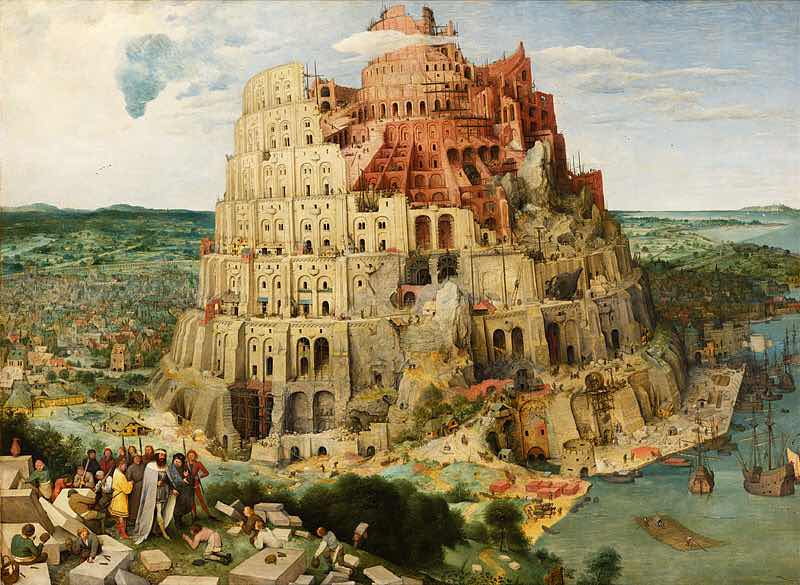
The story of the Tower of Babel is a Hebrew origin story of how multiple languages and cultures came to exist all over the earth. It attempts to offer reasons why there are multiple languages rather than a single common one.

Just as well as this story is familiar, it has been a source of many interpretations, some better than others. It’s been used as a polemic against technology. It’s been used to denounce human pride. It’s been described as a curse against humans, which the Day of Pentecost reversed.

The text begins, “Now the whole earth had one language and the same words. And as they migrated from the east, they came upon a plain in the land of Shinar and settled there.” We observe that at the onset in this story, it is a single people with a common language and culture. They all moved together into a plain in Shinar and built a community there.

It should be noted that this story is an origin story about one aspect of what one ancient people group believed about how different cultures came about. It does not mean that there was only one culture and language across the entire, literal earth. The previous chapter in Genesis, chapter 10, already describes the spreading out of people and nations. What we are seeing is two different stories addressing different aspects of origins.

The text continues, “And they said to one another, ‘Come, let us make bricks, and burn them thoroughly.’ And they had brick for stone, and bitumen for mortar.” The people discovered that the area had good resources for constructing permanent dwellings.

The text continues on, “Then they said, ‘Come, let us build ourselves a city, and a tower with its top in the heavens, and let us make a name for ourselves…’” The people decide that a city is what they need and a grand, central edifice.

At this point we notice the phrase in English, “and let us make a name for ourselves.” This has often and traditionally been interpreted as the hubris of the people at Babel. And certainly argument for this interpretation can be made, including the observation that this Genesis text’s final form was most likely put into place during the Babylonian exile of the Jews. There they would have seen the grand city of Babylon and her many high Ziggurats, so the editors of this Genesis text certainly would have had motivation to include a polemic against urban pride.

But more recent biblical scholars have noted that “make a name for ourselves” is not a phrase that is associated with self-pride in the rest of the Old Testament. It is rather a phrase more commonly associated with identity and legacy. It is a phrase that seeks to answer the questions, “Who am I? And what will happen in the future?”

The Genesis text continues to offer us the reason why the people wanted to build a city and a tower: “‘… Otherwise we shall be scattered abroad upon the face of the whole earth.’” Commentaries note that what this story describes is a people in fear — fear of the unknown, fear of being scattered away from their familiar surroundings and culture, fear of the future, fear of losing what they have built for themselves, fear of change. The city and the tower, they see as building a source of civic identity, solidifying their culture, and codifying for future generations what it means to be them.

It’s in response to this that God comes down to see what the humans are doing. It should be noted how ironic it is that the supposed tower to the top of the heavens (meaning where gods reside and where the people intended the tower to reach) is so far below that God has to come down to see it. Another point to note is that this tower, even if it was successful, would not have been intended for people to go up to where God is. The IVP Bible Background Commentary explains,
The central feature of these early cities in southern Mesopotamia was the temple complex. Often, the temple complex was the city. The temple complex in this period would have been comprised of the temple itself, where the patron deity was worshiped, and, most prominently, by the ziggurat. Ziggurats were structures designed to provide stairways from the heavens (the gate of the gods) to earth so that the gods could come down into their temple and into the town and bring blessing. It was a convenience provided for the deity and his messengers… There were no rooms, chambers or passageways of any sort inside. The structure itself was simply made to hold up the stairway. At the top was a small room for the deity, equipped with a bed and a table supplied regularly with food. In this way the deity could refresh himself during his descent. None of the festivals or ritual acts suggest that people used the ziggurat for any purpose. It was for the gods. The priests certainly would have to go up to provide fresh supplies, but it was holy ground. The ziggurat served as the architectural representation of the pagan religious developments of this period, when deity was transformed into the image of man. (Note on Genesis 11:4, IVP Bible Background Commentary, Old Testament.)
Putting together these various parts of this story, what seems to be happening is that the people who are afraid of very many things that are beyond their control, seek to build a place where God would be obliged to come to them and give them blessings, including security. By having a deity that would reside with them, they would procure an identity and the deity would communicate whatever it is that they wanted through their messengers.

The Genesis text uses the personal name of the Hebrew God, Yahweh. Other deities of Mesopotamia might have been fine with the proposal and plan of the people, but Yahweh is not. Yahweh is not restricted to a people or a geography. He is the God of all peoples, and any attempt to control or use him is thwarted. Yahweh foresees the dangers of uniformity. When people become fixated on uniformity of culture, things do not end well. For this reason Yahweh confuses the language of the people.

Dr. Christena Cleveland, social psychologist and associate professor of the practice of organizational studies at Duke Divinity School, in her book Disunity in Christ, writes about the dangers of homogenous, monoculture:
These days, Christians can easily go their entire lives without spending time with those who are different from them. Unfortunately, the more we spend time with people who are essentially identical to us, the more we become convinced that our way of relating to both Jesus and the world is the correct way. Over time, our convictions grow stronger and our attitudes toward different ideas and cultural expressions of worship become more negative. 
Social psychologists call this phenomenon group polarization. In the absence of diverse influences, homogenous group members tend to adopt more extreme and narrow-minded thinking as time passes… 
What begins as seemingly harmless homogeneity often snowballs into distrust, inaccurate perceptions of other groups, prejudice and hostility… 
When we adopt a unique group identity and surround ourselves with similar ingroup members, we essentially create our own alternate universe in which we believe that the standards, ideals and goals of our ingroup should become the new “normal”—not only for our specific subgroup but for the entire larger group, including the outgroup.
Conversely,
Research shows that diverse groups are better groups—diverse groups come up with more creative and more effective ideas than groups composed of similar people…
Diverse groups that fully live out the biblical mandate to unite under one household of God will reap the benefits of increased learning, increased creativity and more effective problem solving… 
The more we interact with those who are different, the more we can respond to the needs of those who are different.
In other words, diversity is necessary to a healthy society and a healthy church. A healthy spiritual community must value diversity — not only in words but also in practice. Why? Because our God values it. God values diversity so much that a pursuit of homogeneity was deliberately thwarted by God.

Now we jump forward a few millennia to the Day of Pentecost and Acts chapter 2. Let’s read the first few verses again,
1 When the day of Pentecost had come, they were all together in one place. 2 And suddenly from heaven there came a sound like the rush of a violent wind, and it filled the entire house where they were sitting. 3 Divided tongues, as of fire, appeared among them, and a tongue rested on each of them. 4 All of them were filled with the Holy Spirit and began to speak in other languages, as the Spirit gave them ability.
Going back to the start of this sermon, all of a sudden I started speaking in Japanese. What were some of the thoughts going through your mind as you experienced this? Think about that as I read again the next few verses.
5 Now there were devout Jews from every nation under heaven living in Jerusalem. 6 And at this sound the crowd gathered and was bewildered, because each one heard them speaking in the native language of each. 7 Amazed and astonished, they asked, “Are not all these who are speaking Galileans? 8 And how is it that we hear, each of us, in our own native language? 9 Parthians, Medes, Elamites, and residents of Mesopotamia, Judea and Cappadocia, Pontus and Asia, 10 Phrygia and Pamphylia, Egypt and the parts of Libya belonging to Cyrene, and visitors from Rome, both Jews and proselytes, 11 Cretans and Arabs—in our own languages we hear them speaking about God’s deeds of power.” 12 All were amazed and perplexed, saying to one another, “What does this mean?” 13 But others sneered and said, “They are filled with new wine.”
If you’ve ever traveled some place where English is not the primary language and where you don’t understand the language that is used, you recall that most of what you hear is just noise. But if you hear someone speaking English, your ears suddenly perk up and start scanning for the source.
In my case, the same is true of Japanese. I can be in a crowded airport, such as Sea-Tac, where the majority are speaking English. I understand but because the conversation is not relevant to me, I ignore it. But if I overhear a conversation in Japanese, all of a sudden my hearing is attuned to it.

I suspect that is what the crowd in Jerusalem experienced. They were hearing Greek and Aramaic all around, but when those from outside the regular Greek and Jewish areas suddenly heard their native language, their attention was riveted to the source. At the same time others were confused, especially those who knew the disciples. In one sense, this was a little bit like what happened at Babel: all of a sudden the disciples were speaking in languages they had never known before, and hearers were hearing languages being spoken by them, who until just a moment ago had never been known to speak those languages.

But contrary to what some interpretations have explained Acts 2 as a “reversal of Babel,” they did not suddenly collapse into a single, united language. Diversity is maintained, but each hears the same good news of Jesus in the context of their language and culture.

The value of diversity and its importance is continued in Peter’s address to the Jews,
17 ‘In the last days it will be, God declares,
that I will pour out my Spirit upon all flesh,
and your sons and your daughters shall prophesy, and your young men shall see visions,
and your old men shall dream dreams.
18 Even upon my slaves, both men and women,
in those days I will pour out my Spirit;
and they shall prophesy.
The proclamation of the gospel won’t be limited to just a narrow group of people but will be to everyone and for everyone. The new community of Jesus Christ will include every person, regardless of gender, age, or socio-economic status. A few chapters later in this same book of Acts, the boundaries will be expanded further to include all nationalities and cultures.

Diversity is a foundational value and a necessary principle of God’s community. It was included in the “pre-history” section of Genesis and it is reaffirmed in the founding of the Christian community.
Human nature runs contrary to diversity. We don’t like differences and ambiguity. We want sameness and certainty. But through the gift of the Holy Spirit of Jesus Christ to his people, we can overcome our sin-influenced natures and become open and inclusive.

Quoting from Dr. Cleveland once again,
The blueprint of the household of God looks nothing like the blueprints of our own cultural and social cliques. If we want to know how to embody the household of God, we need look no further than to Jesus. While on earth, Jesus modeled this new reality by connecting with every type of person around—conservative theologians, liberal theologians, prostitutes, divorcees, children, politicians, people who party hard, military servicemen, women, lepers, ethnic minorities, celebrities and so forth—and inviting them to be part of his group and to work together to bring wholeness to their cracked and crumbling world. After Jesus ascended into heaven, this continued to be his modus operandi for doing miraculous things in the world. It seems as though the early leaders of the church would agree…
To respond to God’s call fully, we need to express our interdependent diversity in individual churches, denominations and organizations as well as in the worldwide body of Christ. We must be connected to those who are different within our respective churches and we must be connected to those who are different in the larger body of Christ… 
The homogenous, culturally isolated church, denomination or organization is not truly participating in the body of Christ… 
The metaphor of the body of Christ explicitly articulates the need to value different perspectives—to be ideologically interdependent. When we enter crosscultural situations with the belief that our cultural group is holding one piece to the puzzle, we can confidently make our contribution while also looking for and valuing the contributions that other groups make, and as a result, the barriers between us and them begin to fall down.
Pentecost Sunday is an annual commemoration of the beautiful diversity that we have within our community. Pentecost Sunday is also an annual reminder that Christ is who brings unity while bringing forth the blessings that come from our diversity. We are each different, beautiful, valuable, and necessary; yet we remain united and one in Christ. May Jesus’ prayer of John 17:20-23 be fulfilled in us:
20 “I ask not only on behalf of these, but also on behalf of those who will believe in me through their word, 21 that they may all be one. As you, Father, are in me and I am in you, may they also be in us, so that the world may believe that you have sent me. 22 The glory that you have given me I have given them, so that they may be one, as we are one, 23 I in them and you in me, that they may become completely one, so that the world may know that you have sent me and have loved them even as you have loved me.